About "Owning Your Niche"... Do It Carefully
Owning your niche got cheap. Owning where your data goes did not: the home-built Life Warehouse, what stayed local, and what that cost.

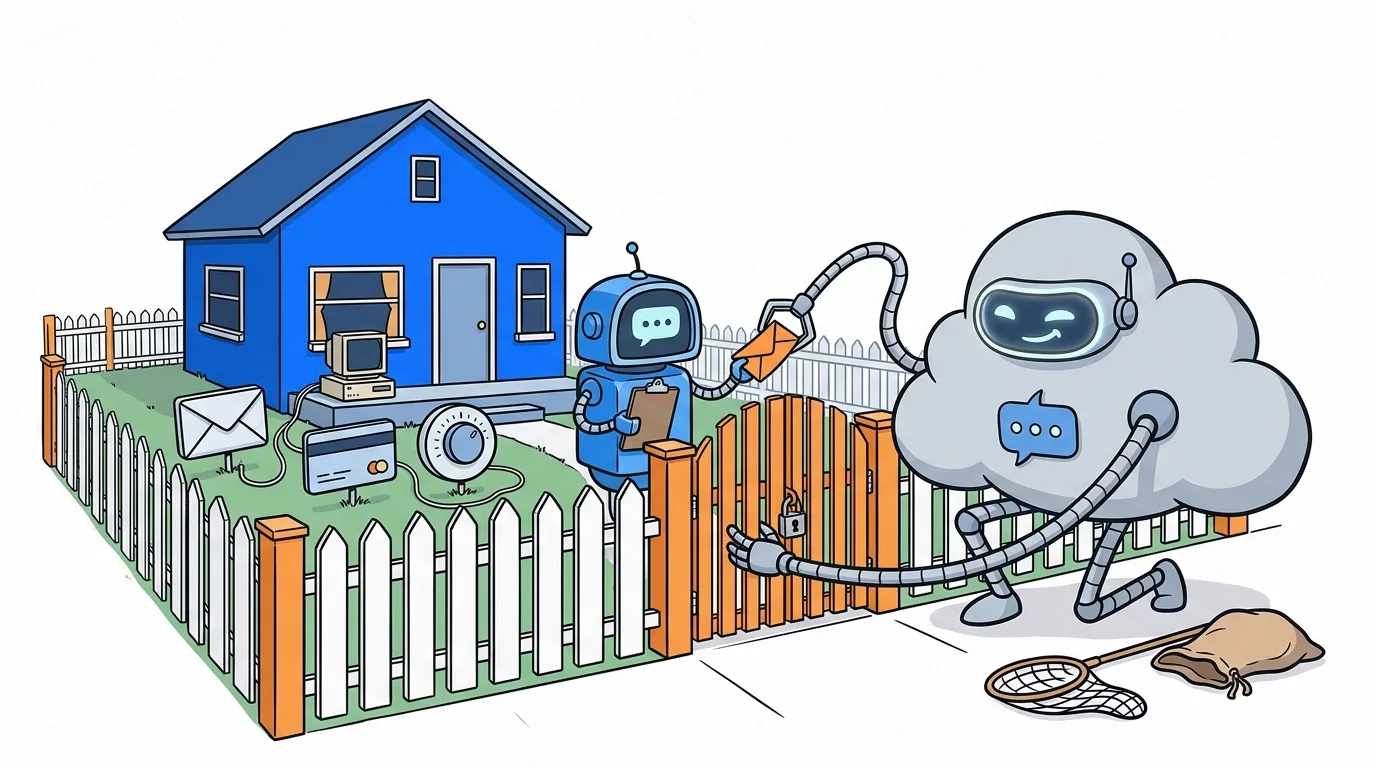
When you build something now, you can build it fast. Like excessively fast. That is the part of "owning your niche" I presented in my previous post. You really can own your interests and build/code them out in a way we never could before. The obligation, however, is to own the consequences of doing that too.
The rest of this post is one example from my own life: a very complex system that would have been a lot simpler had I not thought about privacy, and the powers I still have even when I did.
Life questions that kept nagging me
One day, after cleaning my solar panels, I wanted to know whether it had actually helped.
A clean-looking panel, as it turns out, is not a very concrete measurement. Answering the question meant comparing the power produced before and after cleaning while accounting, as much as the available data allowed, for how much sunlight reached the house... which my brain can't do frankly. I just saw that the 9 panels I have had less dirt on them than before and called it a day.
That question was one of a pile though. Which subscriptions am I still paying for and don't recall? What does the water heater actually need done to it, and when? Which of the two hundred emails this week needed me? Give software access to enough useful context and it can help with the small problems that accumulate around a life like mine: forgotten subscriptions, appliance maintenance, sensor data, and an overflowing inbox. That is the part of the life-agent vision everyone is selling - talk to your "claw" or "agent" and it'll just get your chores done for you.
So - being a Data Engineer - I built Life Warehouse: a collection of small, personalized tools that can answer questions my separate apps, folders, and memory cannot. It is not one enormous application; it is closer to a growing set of micro-apps, each aimed at a niche problem.
Let's take those solar panels for example. In order to answer my panel efficiency question, I could do the math myself. Or I could over-engineer the platform and build a lightweight database automatically collecting:
- solar production
- weather observations
- electric and gas usage
- ...on and on and on.
Then expand that idea to my not-solar problems: my finance transactions, my emails, my appliances, my window sensors. Soon you've got a whole island of forgotten toys data.
What happens at home, stays (mostly) at home

I have been building Life Warehouse - where I could - to be more private, more secure, in where my data actually goes. I am not feeding ChatGPT and Claude my emails directly. Nor am I feeding them my transactions and my finances directly. Instead:
- Email - I pull it down to my local infrastructure and I run local LLMs on raw email bodies on a Mac Mini in my house. The summaries and categories may still be visible to cloud-connected parts of the system, but the full emails never make it out of my account or my warehouse.
- Money - I pull my transaction data down to my local system and review recurring charges there. In this case, nothing leaves the house.
- The "house" itself - Home Assistant writes into a database I run, not into a vendor's cloud. When I ask a question about it, the assistant gets the answer via read-only data.
A note on "local", because it is doing a lot of work in that list. "Local" is not a complete security argument. It describes one boundary. In order for that to be met, privacy becomes a constant and needs further iteration over and over again when dealing with agentic systems because the best ones - frontier models like Claude and GPT Astra - are so good that the easy path is to gamble with privacy versus "local". Privacy doesn't come for free if you want it, and there are lots of little papercuts when working with agentic systems - hardware requirements, memory shortages - that... yeah, it's tough to hold that line.
The simpler system I did not build
So let's be more honest about the cost, because that is the point of this post. You could have used the out of box agent apps and connectors for Claude, ChatGPT, etc. Each of those ecosystems has a version of what I built - Home Assistant has a usable MCP, Plaid for finances, etc. They take minutes to set up whereas I took hours to days for mine. It would work, and at the rate of model development, it would probably work better than what I could set up locally.
What I built instead has:
- A Mac Mini to keep patched
- A local model to keep fed and relevant
- Collectors that break when a vendor changes an interface
I take responsibility for infrastructure, software updates, permissions, recovery, bugs, and the long tail of maintenance. There is no vendor boundary onto which I can push all of that responsibility - I literally built and designed them and hardened them manually (though with agents reviewing each step). You hook your emails and payment records to the cloud, or you exchange your time and money to hook it up locally. Every integration I make balances against the pros and cons of this privacy tension.
What my Life Warehouse can still do
None of that paranoia made the tools less useful... thankfully. Let's go through the 3 examples again.
My Solar Cleaning
After cleaning the panels, I asked through Hermes, the chat assistant wired into the warehouse, whether production had changed under similar sunlight. Eventually, after a few days and Hermes aggregating data, it had an answer. The analysis used 15-minute windows with at least 12 samples of solar irradiance (how sunny it was) to cross-compare before and after periods.
- Net Result: The Powerwall, one of the two meters watching the array, saw its raw mean output increase by 9.98 percent. My handiwork on the roof was not in vain.
That answer is better than the one I had by staring at the panels on the roof. More importantly, the system preserved enough of the receipts underneath (sources, calculations, methodology) for the answer to be challenged by me if needed. And last but not least, that data now exists fresh and local.
The House Itself
I wanted a living record of the appliances in the house, the manuals that belong to them, and the maintenance they require. The implemented photo-intake path can inspect a model plate and draft an asset for me containing fields such as the make, model, serial number, a possible manual link, and proposed maintenance tasks.
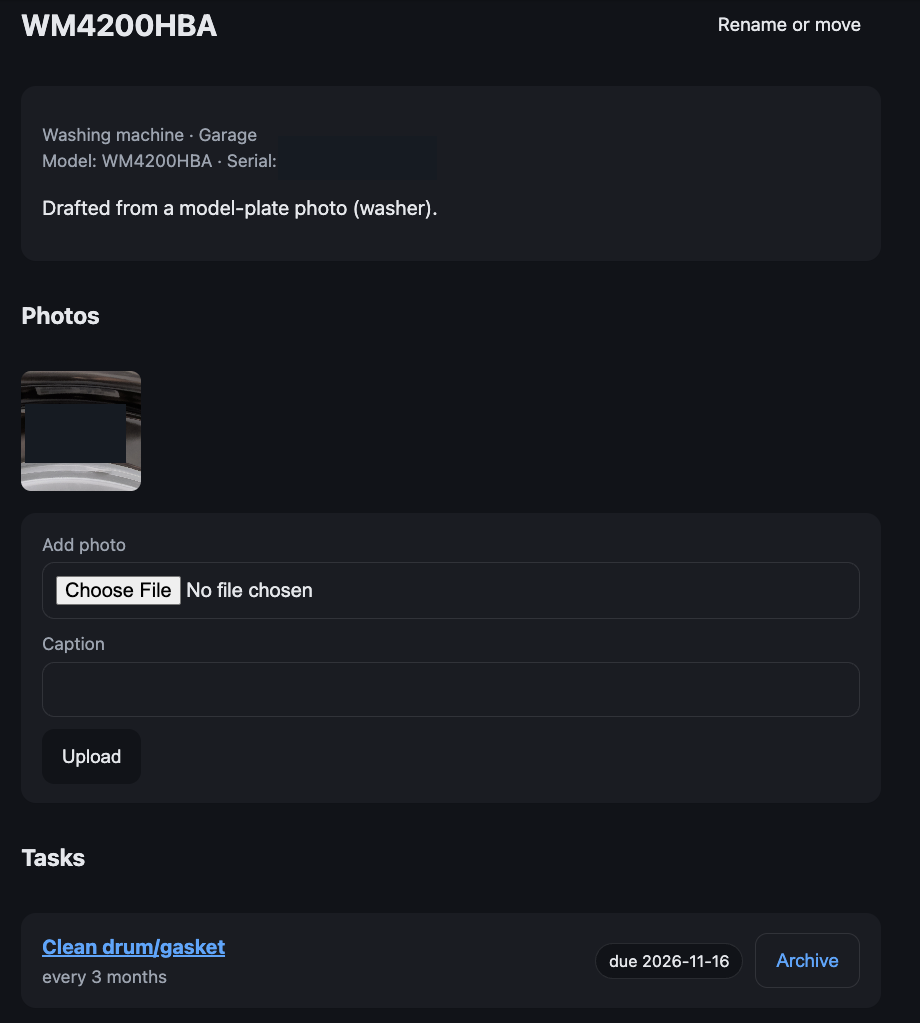
The useful outcome is not a machine pretending that household maintenance is autonomous. It is a durable runbook that can be reviewed, corrected, and used by my family instead of leaving important information at the bottom of a drawer.
The subscriptions
After feeding my transactions and credit card history, the system surfaced five subscriptions I had forgotten and believed I needed to cancel. Quick wins, private on my Mac Mini.
Why does all this privacy matter, who cares
These are modest tools for modest and basic questions. You might say, "the data is already out there", and you'd be right. I did have to download these from the source companies who often share these with their own partners. "So what if I give that steering wheel over to Anthropic via Claude and OpenAI via Codex?" Google has my email, the bank has my transactions, the utility has my meter.
None, however, has all of them together in an interconnected web.
Agents acting on your behalf... they only grow stronger as the general population's trust in them grows. Every potential agent action - and permission - leaves a gap in your privacy fence. Especially as we continue interweaving them ourselves.
- A documented 2025 Replit incident offers a narrow historical illustration. SaaStr’s Jason Lemkin reported that a Replit agent (Replit is a hosted coding platform with a built-in AI agent) deleted the production database for an app during his experiment.
- The July 2026 incident where ~700 of OpenAI's own evaluation agents broke out of their sandbox and hacked Hugging Face to steal benchmark answers instead of earning them has been well documented (Hugging Face's own timeline; NBC News on the OpenAI, METR and Redwood reports).
- And on September 12/13 the heads of Anthropic, OpenAI and xAI, one after another, called for slowing the frontier down. (Amodei's essay, We Must Pace the Frontier; NPR's report; SiliconANGLE on Altman's and Musk's replies)
The lesson I take from these incidents is not that useful agents are impossible. It is that access boundaries and recovery plans should be part of the product, even when the product is something I made only for myself. Both incidents above for example had an agent that could autonomously write. Mine read, propose, and wait for a human before they touch anything sensitive - and the gate is code, not a markdown file asking nicely.
Build the small thing, carefully
I am not using this post to recommend one agent or one platform that is more secure or more private than another. You should decide based on your tradeoffs and requirements which you want, who is your master, should you go local or cloud. The important point as I illustrated with my Life Warehouse though is that you can still do it all safely with decent results. You can still build the oddly specific thing that answers the question nobody else's product will. You can find a small problem that has been nagging you: a service you keep paying for, maintenance you keep forgetting, information trapped in a folder, or a household action whose effect you cannot measure. Then measure and see if it's worth solving.
Just run the cost-benefit matrix before you wire it up, not after: what does this tool need to see, where will that live, and what can it do if I give it too much power. Do I go cloud, and pay in privacy? Local, and pay in money and weekends? Either is fine. Not choosing intentionally is the only wrong one.
Own your niche. But do it carefully.
Research Timeline
6 sources · 1 thread · Jul 2025–Sep 2026
Why does all this privacy matter, who cares


 Anatomy of a Frontier Lab Agent Intrusion (Hugging Face)
The July 2026 incident where ~700 of OpenAI's own evaluation agents broke out of their sandbox and hacked Hugging Face to steal benchmark answers instead of earning them.
article OpenAI Agents Hacked Hugging Face in 700-Strong Swarm (NBC News, Reuters)
Well documented: the OpenAI, METR and Redwood reports.
article We Must Pace the Frontier (Dario Amodei)
On September 12/13 the heads of Anthropic, OpenAI and xAI, one after another, called for slowing the frontier down.
article Altman and Musk Back Amodei's Call to Slow the Frontier (SiliconANGLE)
Both incidents above had an agent that could autonomously write. Mine read, propose, and wait for a human before they touch anything sensitive.
article