After-Post - Return of The Jedi System
Behind both the post and the parametric 3D models is a growing collection of notes, research, code, and AI assistance.


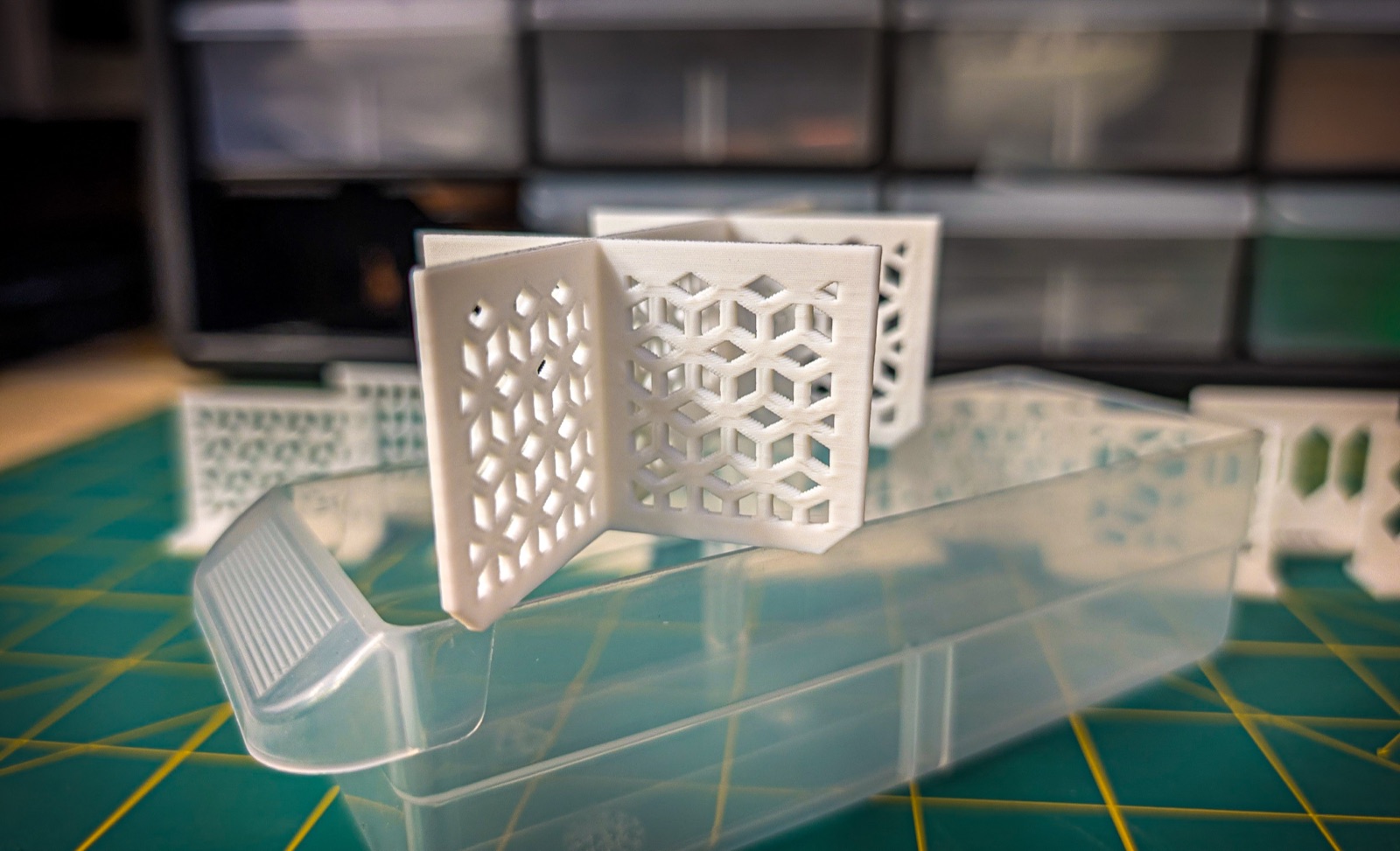
This is the After-Post: the more technical, in-the-weeds account of my life's work. Anything goes, but usually it's related to the most recent article I wrote (in this case, AI & Owning a Niche). The AKRO drawer inserts also came out of the same stretch of work.
This week we'll focus on the Knowledge Repository or "Second Brain". Behind both the post and the parametric 3D models is a growing collection of notes, research, code, and artificial intelligence (AI) assistance that I am trying to turn into a sustainable way of working. (Sustainable in this case means - while having a family, day job, friends, and hobbies - putting out these models and posts.) Having access to all the knowledge that I had previously made, being able to add research, synthesize more information faster, automatically linking, tracking, and feeding that information to all my half-baked ideas...
Just small stakes.
Keeping the context around

Obsidian
Obsidian is my poison for a common notes/wiki/knowledge foundation. It holds my captured thoughts, source notes, research, unfinished post ideas, and the project context that connects them.
In the case of my 3D-printing post, we used:
- Research about parametric modeling + OpenSCAD,
- Business primers and research about 3D printing ecosystems
- Upload writing strategies, tags, keywords, search engine optimization (SEO) for the listings
- The actual parametric-studio codebase and pipeline sitting alongside the vault
... All fed into one Obsidian Vault accessible by all my agents (Claude, Codex, Hermes, Antigravity/Gemini). (For folks who don't use Obsidian, a vault is effectively a folder with some smarts on top.) With that in place, I am able to store incomplete or completed ideas with their history attached AND agents handling all the manual backlinks and graphs auto-magically which is where I kept falling off of these smart graph-based note apps previously. An agent can help find those connections or synthesize the relevant material without forcing me to reconstruct it manually while using that same "one brain" to feed project information to actual code now (e.g. best models to make research -> which OpenSCAD generators to make to generate 3D prints.)

From theory to practical
Once the context is stored, we move over to practical coding. "Parametric Studio" is the private code pipeline where the model branch becomes actually printable. Prior to the pipeline repo, we launched a couple parallel tracks focused on topics like what is worth making, what the pipeline needs to do, and how to effectively design 3D models stored again in Obsidian. The repository then uses that context to empower its decisions via a more precise form of checks and balances. My additional flavor is to then help set up exact math: dimensions, constraints, geometry. Without that, an agent's ability to modify spatially complex spaces like 3D models is filled with hallucinated numbers and guesswork. Some examples of this context included:
- Generating and maintaining a running print "gotcha" list fed from initial research by Gemini - fixes for normal print defects, types of material, how filament and models expand/contract
- A fused deposition modeling (FDM) library skill and reference covering the basics of 3D printing and materials science
- Idea notes populated by looking through various maker websites (MakerWorld, Thangs, Cults3D, Printables) to seed for the studio to try and design code against
Effectively - we have a Product Manager and Researcher informing the Coder in the repo at this point.
For the AKRO inserts, OpenSCAD translated a laundry list of 20-ish measurements manually taken by me covering all aspects of the organizer and trays into computer-aided design (CAD) through code. I could bring a sketch, measurements, and a description of what I needed, then work with an agent on the geometry and vectors. That let me use the engineering and coding experience I already had while learning a modeling system I had not previously had time to become comfortable with.
That being said - the first AI output didn't work. As I described in the main post, I had to supply a lot more physical constraints and guardrails before it understood the minute details of, say, manufacturing defects in the organizers or how friction slots work or how transparency labels were needed or the width of an average human finger to fit slots. Being able to render a shape was not the same as having an insert that fitted the drawer and was physically functional.
Now, with words please
Once the 3D prints started rolling off my Bambu printer, it was time to start writing. Writing starts with a different kind of rough material: dictations like the one behind this post, answers to interview questions being grilled by the AI, and notes I took while sanding prints. These once again end up in the Obsidian Vault though as a central resource.
Where the AI came in now was being a collaborative editor. Traditionally - and my coworkers can vouch for this - my writing tends to be very long, very technical, very in the weeds. My previous technical communication post touches on some of the constraints I have made to rein it in poorly.
The AI helped me:
- Stop burying the ledes
- Shape my arguments more formally/informally
- Link my scattered notes and thoughts coherently
- In my experience, do all that for me in a few minutes vs. me editing for hours
As recommended by prompting guides by Anthropic and OpenAI or agent harnesses like OpenClaw, there are ways to better personalize the writing styles of the agents through Skills and style guides. I have my eric-writing-style Skill as a set of instructions for that editorial work. It separates my explicit rules from my usual writing habits observed in earlier posts and from general structures that might suit the current piece. It helps steer my personality and writing... isms back in for the most part. The previous post is a useful example of why I still need to make a lot of the writing myself. Out of curiosity, I did kick off a first AI draft and it was awful. I was reading effectively a schematic for the AKRO organizer verbally - overfitted to the engineering and measurements, no real point behind it, bereft of any actual purpose beyond being an instruction manual for a plastic tray.
I'm sure at some point the AI will stop posting about "load-bearing truths" every few words but we're not there yet.
What happened to the blog itself

During this revamp, we transitioned the site from Gatsby to Next.js. Along the way, we:
- Automated building static files
- Hand off the repo code via GitHub Actions on commit/pull requests
- Remotely build, lint, validate/unit-test
- Once green on a Continuous Integration (CI) push, deploy these static files to the DigitalOcean "droplet" (aka server and virtual host)
- Nginx serves the files to the ocean of the internet.
This was an aspect of fiddly-enough-that-I-couldn't-care-to-get-it-working-before that handing it over to an agent got a major thumbs up from me. The CI checks - formatting, linting, type checking, tests, the build - are built on top of local visual quality assurance (QA) checks already done on my computer as an audit of the generated site's styling, search-engine metadata, and indexing helpers.
So, was it worth it?
At the beginning of this post I stated we would cover how my knowledge repository worked and if it actually helped in meaningful ways. I am very good at building systems of systems that don't actually produce anything useful. And so, for the automation to work, I have to have published outputs for both. So, in this case, we are on the way to meeting that goal. 3D print models and content are being produced faster than I have ever done before. If neither of those happened, that meant the machine failed once again.
- The AKRO inserts were produced and I have 5 more miniatures-based listings on the way soon (done, just not photographed)
- This post was drafted within a week of the last post compared to my nearly six-year gap for previous posts (a low bar)
That is encouraging evidence that I can get work through the system again - but I said that last time too.
The next test is what happens when I return to work and the available time gets smaller. Is the machinery enough?
- Will it continue informing context when I have less time to add as many details for the research passes?
- Will automation around market research feed a consistent 3D print pipeline I need to build prints on demand?
- Will the rote minutiae of managing these systems be abstracted away enough so I can focus on the ideas, the creativity, the direction?
... we'll see. I'm encouraged so far.
"Any Takeaways for me, your humble reader?"
What I hope someone takes from this is an example they don't need to be all AI or no AI. It's about adapting and enhancing your own strengths and shoring up your weaknesses.
AI is supposed to be a multiplier and not a wholesale replacement. Whether it's in reprocessing my Obsidian dictations, helping build the parametric models, or copy-editing my posts - it's clear there are utilities and functions that I could not live without now.
Side Asterisk - I am figuring out how to balance my use of AI with a lot of moral and ethical underbellies here though around the general AI space. In future posts, I may explain a bit for example more about my local HomeLab setup hosting large language models (LLMs) on my gaming rig and Mac Mini. We'll leave that for a future After Post.
Research Timeline
10 sources · 3 threads · Apr–Sep 2026
Obsidian and shared context
 Hermes and Obsidian Setup (Metedata)
example of OpenClaw era automations against Obsidian.
article 10 NotebookLM and Claude Workflows
Obsidian is my ingestion point with Claude as my thought partner and idea processor managing the context of this vault.
article Building a Personal OS (Creatism)
Some of the feedback loop stuff could work for Claude–Obsidian integration.
article How to Build Your Agentic Knowledge Base (Chris Lettieri)
How we can better use our curate-vault and fishing skills for maintaining the links, cleaning notes, and efficiently searching our knowledge graph.
articleWriting and skills
 Claude as Content Strategist (Tayla Burrell)
how folks are using and generalizing content as a drip feed to other social channels.
article AI Content and Proof of Thought (Here Is Your Brain)
what does humanity look like when it comes to writing?
article Skills Need a Lifecycle (Guy Podjarny)
A basic explainer on skills and evals; potentially a health check across the ones we're building.
podcastAgent instructions
 Claude Code — Persistent Instructions (Anthropic)
Just developer docs being dev docs
documentation Codex — Custom Instructions with AGENTS.md (OpenAI)
Just developer docs being dev docs
documentation